
HISTORICAL PREJUDICES WERE ALWAYS A PART OF OUR EU NEGOTIATIONS
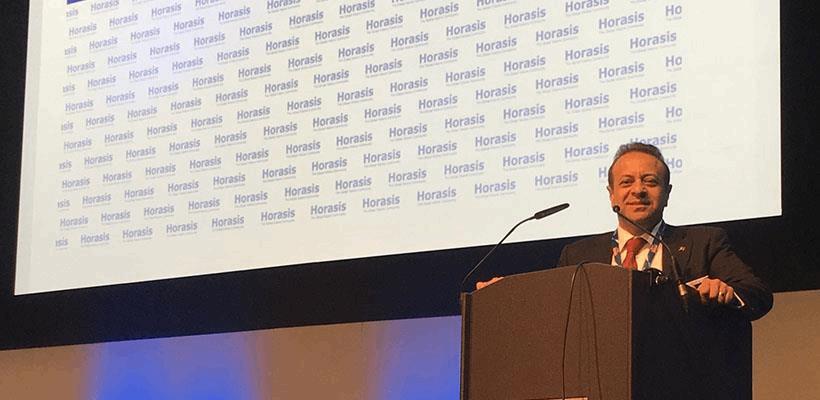
Turkey's former EU Minister & Chief Negotiator Egemen BAGIS spoke at the Horasis Global Meeting in Liverpool.
At the panel titled Learning from History, Minister Bagis said: "Learning from history has always been the best solution, the trouble is, history is the rear vitableew mirror, whitablst politicians and business leaders need to watch the windshield.
Meanwhile there’s the paradox: in politics there’s never a moment when you forget history… and although today and in the future there can be a promise of clean slates we are, in fact, bound with history.
My previous job as an EU Minister aimed to build a dynamic future and develop old and new relationships, but this was also shaped by historical terms.
I was set to operate under a 1963 treaty that had been signed by some other chap, but he was here, in 2013, dictating my current path.
Then there was an even deeper history. I was assigned to take Turkey to the EU, but this was a 150 year old task, that had been set from Ottoman Empire times.Turkey has wanted to be part of Europe for so long and on that path, there’s not much margin of error…
There are some who say that if the Turks had not rebounded at Vienna, Turkey’s European accession problem would have been solved a long time ago.
Even the Cyprus dispute has roots that originated in 1571.
If we look at France and Germany, who commemorate the 100th anniversary of WW1 together - this is a good and positive example of learning from history.
The UK’s Brexit dilemma sounds like a curent issue, but it is actually a historic issue too.
Mr David Cameron wants to keep his country in the EU - he thought he would have a bargaining chip as he initially called for Brexit. But hey, the EU doesn't do too well with blackmails, look at Mr Tsipras…
So what does history say about a Brexit? Can the UK do without it? What happens if the UK is out? It's more than likely the EU will be a very loose club, whilst others may also follow.. What was the design, and why wasn't the product as successful as the blueprint?
History says Germany should be anchored into alliances… This is also a historical issue, not a current one. The question is: Is the EU really a successful union? Has it achieved all its divine goals, and what is the debate about it's non-sensensical bureacracy ?
If EU could learn from history, the terrorist who killed so many innocent people at the Burussels airport would not have been freed by Netherlands after being detained in Turkey two years ago and delivered to Dutch authorities upon their request. Similarly EU would not pressure Turkey to revise and soften its legislation to fight terrorism. The crazy terrorist in Orlando should not be allowed to have access to arms after being investigated twice by the FBI.
In the Middle East , there has been another 100 year anniversary, the secret agreement concluded in May 1916 by Sykes and Picot. The two officers divided the Middle East 100 years ago. Look at the mess now…
One would say: Something that happened 100 years ago wouldn’t necessarily impact today. However, if you talk to Iraqis, they may well agree to disagree.
There are strong arguments that the Sykes and Picot Agreement isn’t responsible for the mess, although even debating this implies the impact of its effects in history on today.
In Europe and the Middle East we are now in modern times. It is the 21st Century, but today is massively shaped by the past. Perhaps more than anytime before.
If history doesn’t impact on your own mind frame, it surely impacts your counterpart's sitting across the table.
In conclusion, breaking from the past is not always a possibility for some nations, and political/ diplomatic decisions are very much shaped by history.
We are watching the windshield, but we must also pay equal attention to the rear view..
Don't forget, there is always an annoying passenger in the backseat with a history book in their hand that will keep interfering!"
